
Planning a trip has become much easier in the digital age, thanks to travel planning apps. Whether you are organizing a weekend getaway, a business trip, or an international vacation, these apps help travelers manage every stage of their journey from a single platform. From researching destinations and booking flights to creating itineraries and navigating unfamiliar cities, travel planning apps simplify tasks that once required multiple websites, guidebooks, and travel agents.
As smartphones and internet connectivity have become more accessible, millions of travelers now rely on digital tools to save time, reduce stress, and make informed travel decisions. Modern travel apps combine maps, booking services, weather forecasts, transportation details, budgeting tools, and travel recommendations into one convenient experience.
This article explains how travel planning apps work, the technologies behind them, and how they make travel planning easier for beginners and experienced travelers alike.
What Are Travel Planning Apps?
Travel planning apps are digital applications designed to help users organize and manage different aspects of a trip. Instead of using separate tools for booking, navigation, budgeting, and itinerary management, these apps combine multiple travel services into one platform.
Most travel planning apps allow users to search for destinations, compare transportation options, book accommodations, store travel documents, create schedules, and receive real-time travel updates.
Some applications focus on specific functions such as flight bookings or hotel reservations, while others provide complete travel management from the planning stage to the return journey.
How Travel Planning Apps Work
Travel planning apps work by collecting and organizing information from multiple travel-related sources. They use internet connectivity, cloud technology, location services, and integrated databases to provide users with updated travel information.
When a traveler enters details such as destination, travel dates, budget, or personal preferences, the app processes this information and displays relevant options.
Many apps integrate with airlines, hotels, transportation providers, weather services, and mapping platforms to provide real-time information. This allows users to compare choices and make informed decisions without switching between multiple websites.
Cloud synchronization also enables travelers to access their itineraries and bookings across different devices.
Destination Research Made Simple
Choosing the right destination is often the first step in travel planning. Travel planning apps simplify this process by providing detailed information about cities, attractions, local culture, transportation, climate, and travel seasons.
Many apps recommend destinations based on user interests, travel history, budget, or preferred activities.
Travelers can explore photos, reviews, travel guides, and estimated expenses before making decisions.
Having access to organized destination information helps users select locations that best match their travel goals.
Easy Flight and Transportation Booking
One of the most valuable features of travel planning apps is their ability to simplify transportation bookings.
Users can compare airline schedules, ticket prices, train services, bus routes, and rental vehicle options within a single platform.
Many apps display available travel choices according to price, duration, convenience, or departure time.
Some applications also notify users about fare changes, booking confirmations, gate updates, or schedule modifications, making transportation management much more efficient.
Hotel and Accommodation Management
Finding suitable accommodation is another important part of trip planning.
Travel planning apps allow users to compare hotels, resorts, apartments, guesthouses, and vacation rentals based on budget, location, amenities, and guest ratings.
Advanced filters help travelers narrow their search according to specific preferences such as family-friendly properties, business facilities, free internet access, or nearby attractions.
Having multiple accommodation options in one place makes the booking process faster and more convenient.
Creating Organized Travel Itineraries
A travel itinerary serves as the roadmap for an entire trip.
Many travel planning apps automatically organize bookings, transportation schedules, hotel reservations, and planned activities into a single timeline.
Instead of carrying printed documents, travelers can access their complete itinerary through their smartphones.
Some applications also allow users to manually add sightseeing plans, restaurant reservations, meeting schedules, and personal reminders.
An organized itinerary reduces confusion and helps travelers manage their time efficiently.
Real-Time Navigation and Maps
Navigation has become one of the most useful features of travel planning apps.
Using GPS technology and digital mapping systems, these apps provide turn-by-turn directions for driving, walking, cycling, or using public transportation.
Travelers can easily locate hotels, restaurants, tourist attractions, hospitals, airports, and transportation stations.
Many applications also offer offline maps, allowing users to navigate even when internet access is unavailable.
Reliable navigation reduces the stress of exploring unfamiliar destinations.
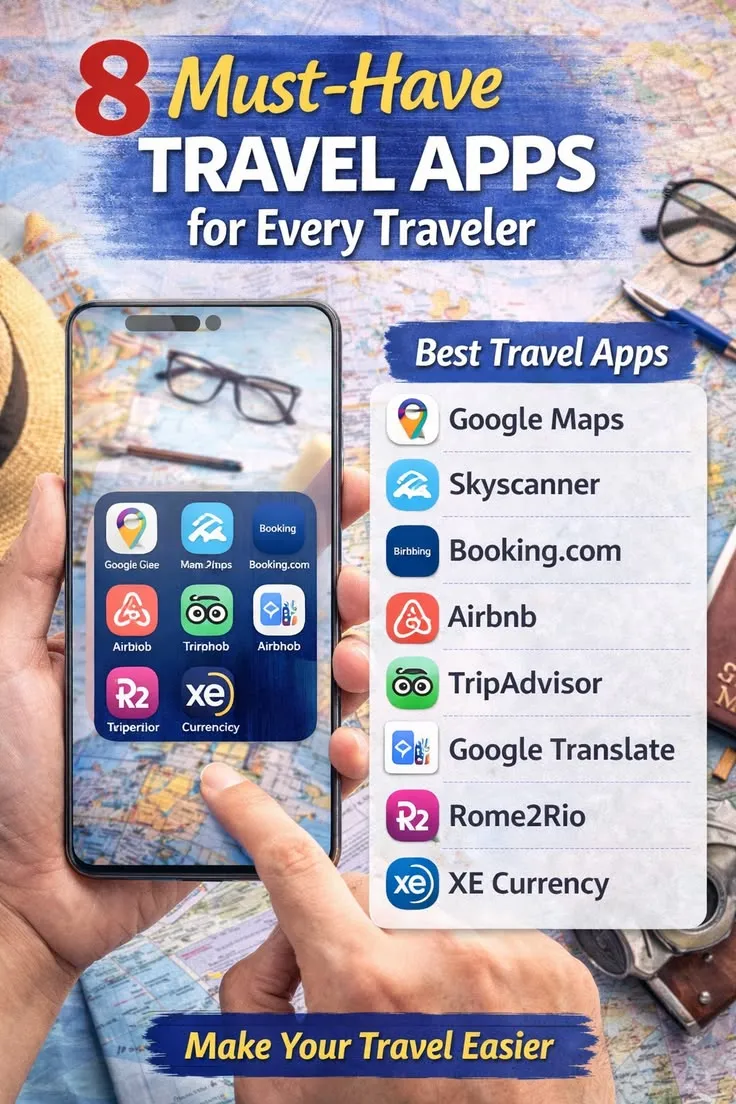
Weather Updates for Better Planning
Weather conditions can significantly affect travel experiences.
Travel planning apps integrate weather forecasting services to provide current conditions and future forecasts for selected destinations.
Knowing expected temperatures, rainfall, storms, or snowfall helps travelers pack appropriately and adjust outdoor activities when necessary.
Weather alerts also improve travel safety by informing users about changing environmental conditions.
Budget Management During Travel
Managing travel expenses is important for both short and long trips.
Many travel planning apps include budgeting features that help users estimate transportation, accommodation, food, shopping, and entertainment costs.
Some apps allow travelers to record daily expenses and monitor spending throughout the journey.
Budget tracking helps travelers avoid overspending and maintain better financial control during their trips.
Travel Document Organization
Keeping travel documents organized is essential, especially during international travel.
Many travel planning apps allow users to store digital copies of boarding passes, hotel confirmations, travel insurance information, passports, visas, and other important documents.
Having digital access reduces the risk of losing printed documents and makes check-in procedures more convenient.
Secure storage also allows travelers to retrieve information quickly whenever required.
Personalized Travel Recommendations
Modern travel planning apps often use artificial intelligence and data analysis to personalize recommendations.
Based on previous searches, travel preferences, budget, and interests, apps may suggest destinations, attractions, restaurants, activities, or transportation options.
Personalization helps travelers discover experiences that match their individual preferences instead of relying only on general travel information.
As users continue using the app, recommendations often become more accurate.
Benefits of Travel Planning Apps
Travel planning apps provide numerous advantages for travelers.
They save time by organizing multiple travel services within a single platform. They reduce planning stress by simplifying bookings, itinerary management, and navigation.
Real-time updates help travelers respond quickly to changing travel conditions, while budgeting tools improve financial planning.
The ability to access travel information from anywhere also improves convenience throughout the journey.
Overall, these apps make travel more organized, efficient, and enjoyable.
Challenges and Limitations
Although travel planning apps offer many benefits, they also have certain limitations.
Some features require internet access, while others depend on accurate information from third-party service providers.
Travelers should always verify important booking details, visa requirements, transportation schedules, and local regulations before departure.
Privacy and data security are also important considerations when using travel applications.
Choosing trusted apps and following good digital security practices helps protect personal information.
Future of Travel Planning Apps
Travel planning technology continues to evolve rapidly.
Artificial intelligence, machine learning, voice assistants, augmented reality, and predictive analytics are making travel apps increasingly intelligent.
Future travel planning apps may provide even more personalized itineraries, automatic schedule adjustments, smarter language translation, and enhanced real-time travel assistance.
As technology advances, travel planning will likely become even more convenient, efficient, and user-friendly.
Frequently Asked Questions (FAQs)
How do travel planning apps help travelers?
They help organize transportation, accommodations, itineraries, navigation, budgeting, weather updates, and travel documents in one place.
Do travel planning apps require internet access?
Many features require internet connectivity, but some apps also provide offline maps and saved itineraries for use without an internet connection.
Are travel planning apps useful for international travel?
Yes. They help manage bookings, navigation, travel documents, currency information, and destination planning, making international travel more organized.
Conclusion
Travel planning apps have transformed the way people prepare for and experience their journeys. By combining booking services, itinerary management, navigation, budgeting, weather updates, and personalized recommendations into a single platform, these apps make travel planning significantly easier and more efficient.
Whether planning a solo adventure, a family vacation, or a business trip, travelers can benefit from the convenience, organization, and real-time support provided by modern travel planning apps. As digital technology continues to advance, these applications will play an even greater role in helping travelers enjoy smoother, safer, and more memorable travel experiences.