
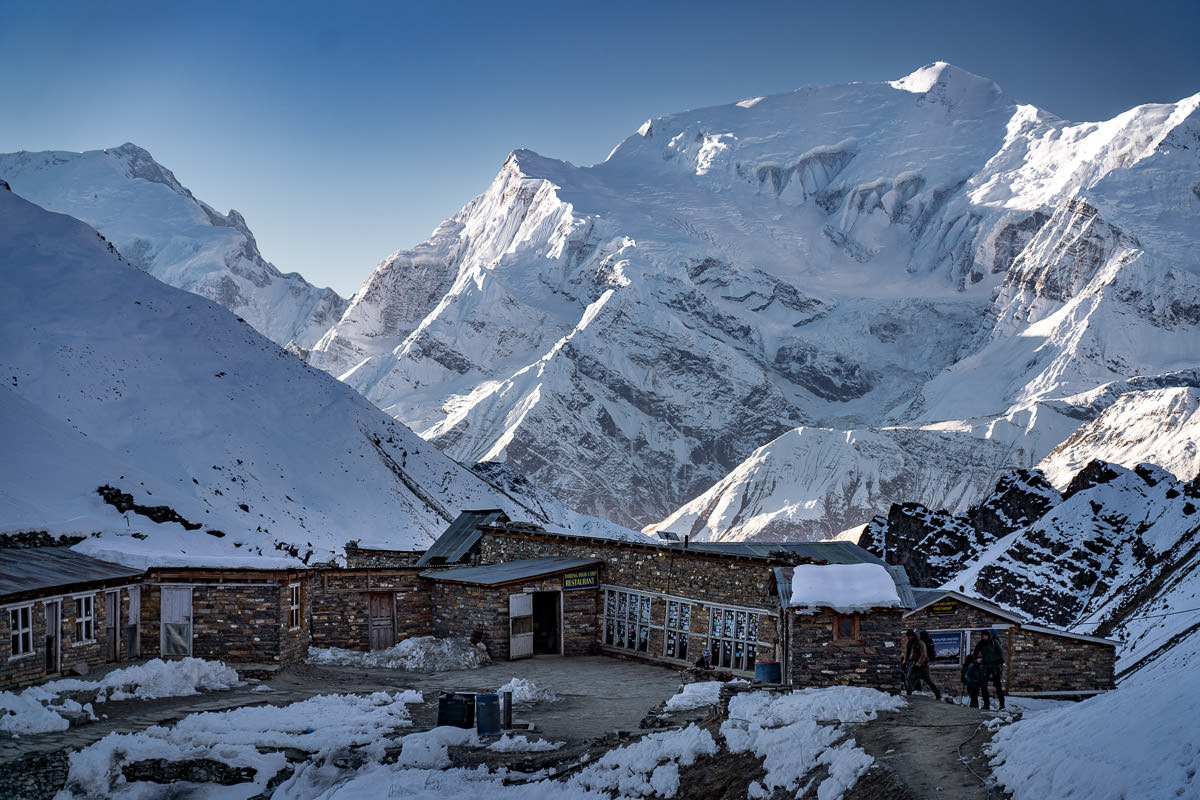
Annapurna Circuit Trek—famous for stunning views of its Himalayas, diverse cultures, and challenging trekking trails, this route also has great places to discover the wildlife in Nepal. The trail traverses different elevations, forests, valleys, and protected areas, providing opportunities to encounter a range of very adaptable mammals & birds that flourish even in changing habitats.
The Annapurna Circuit is not only a description of the great biodiversity of Nepal’s Himalayas, from lush, subtropical forests to high-altitude mountain zones. Not only do you get treated to mountain views, but the fun doesn’t stop there—you’ll also get wildlife.
Embrace the Multitude of Ecosystems along the Trail
Since this route consists of a number of ecosystems, Annapurna Circuit Trek itinerary expects to support various sorts of wildlife. It runs through river valleys, forests in the lowlands, alpine meadows, and high mountains. Every landscape serves as a home to individual species, allowing explorers the opportunity to see shifting wildlife ecosystems on their trek. The elevations you gain with alpine distance to see and relish the miraculous plant diversity in this stupendous region all on a trek make the Annapurna region one of perhaps the best nature darlings and experience travel goals.
Search for the Himalayan monkey in Lower Forest area
While sections of the lower Annapurna Circuit Trek provide the trekkers with, like, a dense forest, colorful flowering shrubs and lovely trees provide habitat for many different kinds of monkeys. Langur monkeys are common animals, and they can be reached on the mountainsides of Nepal when they walk through trees or move on their two hind legs like humans, out of sight.
They are a traveler’s attraction around greenery, by the way; they play while looking unique. Seeing this wildlife in its natural habitat is an incredible way to interact with the biodiversity of this part of Nepal and a great reminder of how important it is to preserve the forests.
Himalayan Birds Gone A-hunting For Them All Along
Annapurna Circuit Trek — Birdwatching Besides that, one of the most fascinating wildlife sports you can do throughout your trek is birdwatching. This route abounds in a variety of birds, such as colorful pheasants (known also for their medicinal properties), Himalayan griffons, eagles, and other mountain birds.
These kinds of landscapes establish the habitats for both woodland and altitude species. As a result, birds tend to be most active during cooler times, so an early morning outing is often prime viewing. So if you are a nature lover, pack your DSLR or even use your smartphone so you will have plenty to capture the beautiful mountains and variety of birds for nice photographs and quiet time on hiking tracks.
See Blue Sheep
Blue sheep (bharal) can be found here among the most unique and interesting animals on the Annapurna Circuit high-range trek. Adapted to the rocky Tibetan horqin US mountain stacks, long-tailed animals can be found with their grazers in shrub-covered grassy slopes and open areas located where alpenglow exchanges hypernymous formations.
There is no guarantee that trekkers will see a snow leopard, but those hiking slowly into altitude near the Thorong La Pass region may be lucky. What This Animal Observation Symbolizes These blue sheep are unfortunate, with such a lifetime opportunity that they are in the distance, their first and last sight. High-ups on the mountain distinctly represent what makes Himalayan wildlife beautiful.
Occurrence of Snow Leopards
Even then it is reserved for one of the Himalayas’ great endemics that is also likely to be one of the rarest to spot—the snow leopard. These elusive predators call the Annapurna region their natural habitat—ideal ground with its remote, high-altitude landscapes.
As a relatively solitary animal, less frequently seeing an event-positioning human action, he is bereft of mellifluous importance en route to hiking the Annapurna Circuit. The mere notion that these majestic beings inhabit the mountains so close to us stirs up a special excitement even if we never see one, with growing recognition of our responsibility for preserving wildlife in areas secured by Nepal’s national parks.
Himalayan Thar in Mountain Landscapes
Human-monitored Himalayan Thar Another of the beasts that you may see along the Annapurna Circuit Trek is also considered an endangered species—the Himalayan thar. Loosely associated with steep mountain areas, this wild goat usually reposes in rocky cliffs and grassy slopes.
They are very good climbers, and obviously the Himalayas are somewhat of a rough home for them. When surrounded by ornate crests and hollows, it is really fun to distinguish a Himalayan thar wandering through the mountain topographies. These animals are the best example of the wondrous adaptation of wildlife that lives in some of the highest ecosystems on earth.
See Wildlife in the Annapurna Conservation Areas
The Annapurna Circuit Trek is another protected area called the Annapurna Conservation Area. While preserving endangered species, this type of environment conservation is also an indispensable part of ecological balance in the region. It is a sustainable tourism project that can offer trekking routes into this protected zone while creating opportunities for responsible wildlife watching.
This admirable, local ecology is a perfect example of how thoroughly conservation can harmonize natural beauty with community use and wildlife protection. The understanding gathered from the examination of this zone, thusly, gives an authentic confides in its duty to preservation, contrasting them with Himalayan environmental changes.
Practice Responsible Wildlife Observation
Wildlife observing manners of respect for wild animals’ threats as well as our nature, we are responsible trekkers during the Annapurna Circuit Trek through the week. You will not be a wildlife trekker if you disturb wildlife; you must keep a safe distance away from wild animals and never approach them or feed wild animals. This will certainly safeguard the stunning biodiversity of the Annapurna area for future generations.
This has probably got something to do with the epic Himalayan peaks, for it often comes as a number one contender when folks talk about the most scenic trekking in the world—the Annapurna, home to better trekking experiences with the ability to explore birds, mountain animals & more ecosystems. Wandering in forests, traversing alpine places Safeguarding the wildlife will be one of the keys to keeping this Himalayan journey clean and pristine as a jewel.
In nature, away from mountain views—How to shoot
The Annapurna Circuit Trek is beautiful every step of the way, with many of the best peaks in the Himalayas rising around you, but the wildlife moments will leave just as big a memory. Birdwatching to other mountain fauna and ecosystems. It doesn’t matter if you love hiking in forests, alpine landscapes, or remote valleys—each section of the route can be explored in advance. Without question, these natural encounters remind adventurous travelers that the Annapurna region is more than just a beautiful, rugged mountain landscape but an ecological nexus of incredible biodiversity.
Explore Full Annapurna Circuit Trek Itinerary
Wildlife along the Annapurna Circuit Trek adds another level of a trip that we cannot forget. From colorful birds and forest creatures to rare Himalayan beings that have adapted to extreme climates, the trail displays Nepal’s rich diversity of wildlife. From culture to summit, from valleys and nooks to magnificent mountain views, this complete inside scoop on the Himalayas has multiple terrains explored.
Buying that best travel guide The Annapurna Circuit Trek is considered to be one of the most beautiful trekking routes on earth, and for nature lovers and trekking fanatics exploring wilderness in its richest form,, this trek will leave you with great memories of cruising wildlife deep into the living legends of Nepal.