
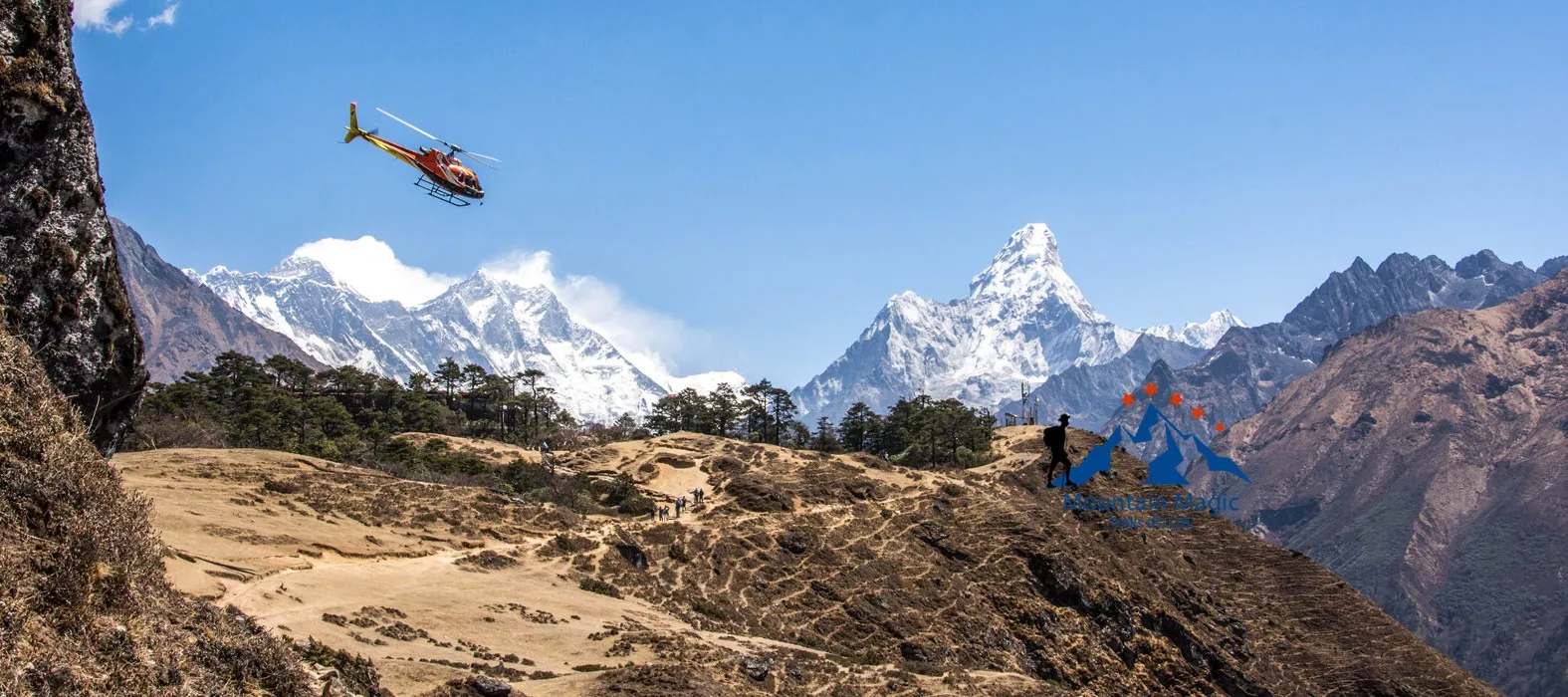
A helicopter journey from the Everest region is not simply a shorter version of a regular flight. Passenger numbers, aircraft capacity, luggage weight, landing conditions, and flight coordination all affect how the journey operates. These details become especially important when travelers are returning from a remote mountain location.
The Everest Base Camp Trek with Helicopter Return offered by Mountain Magic Treks includes helicopter transportation as part of its itinerary. Depending on the package and operating arrangements, flights may involve shared or private services. Understanding the difference helps travelers know what to expect and which questions to ask before confirming their trip.
What Is a Shared Helicopter Flight?
A shared helicopter flight means that passengers travel together in the same aircraft instead of booking the entire helicopter for one private group.
This arrangement can be useful for travelers who do not need exclusive use of an aircraft. The operator coordinates passengers according to available seats, aircraft capacity, weight limits, and flight conditions.
How Passenger Sharing Works
A shared flight may include travelers from different trekking groups. Passengers need to follow the operator’s instructions about departure arrangements and baggage.
The exact passenger arrangement can change depending on the aircraft and operating conditions. At high altitude, the helicopter’s usable payload is affected by factors such as elevation, temperature, and weather.
For this reason, travelers should not assume that every flight will carry the same number of passengers.
What Does a Private Helicopter Arrangement Mean?
A private helicopter arrangement generally means that an aircraft is reserved for one individual, family, or group rather than combining them with unrelated passengers.
This option may offer greater control over group coordination and travel arrangements. However, it does not remove operational restrictions.
A private booking must still follow aircraft weight limits, safety requirements, landing permissions, and weather conditions.
When Might a Private Arrangement Be Suitable?
A private arrangement may be worth considering when:
-
A group wants to travel together.
-
Travelers prefer an exclusive aircraft booking.
-
The group has specific coordination requirements.
-
The company can confirm a suitable aircraft and operating plan.
Private arrangements usually involve different costs from shared transportation. Travelers should request a written quotation that explains what is included.
Why Aircraft Weight Limits Matter at High Altitude
Helicopter performance changes with altitude. Air density decreases as elevation increases, which can affect the aircraft’s ability to lift passengers and luggage.
This is particularly important around Gorakshep, which sits at approximately 5,164 meters above sea level. The high-altitude environment means operators must consider aircraft performance carefully.
Passenger Weight and Baggage
Operators may ask for passenger weight information before confirming a flight. They may also set limits on the amount of baggage that can be carried.
Travelers should provide accurate information when requested. Incorrect weight details can create problems during flight planning and may lead to changes in passenger arrangements.
A private booking does not automatically remove weight restrictions. The aircraft must remain within its approved operating limits regardless of how it is booked.
How Passenger Coordination Works at Gorakshep
Gorakshep is an important location for the helicopter return section of the itinerary. It is close to Everest Base Camp and provides a departure point for the planned journey back toward Kathmandu.
Because the settlement is remote and located at high altitude, helicopter operations require coordination between the operator, trekking team, and passengers.
What Travelers May Need to Do
Before departure, travelers should:
-
Follow the guide’s instructions about the meeting point.
-
Keep their belongings ready for the flight.
-
Follow the operator’s baggage requirements.
-
Listen carefully to boarding instructions.
-
Avoid approaching or boarding the aircraft without permission.
The guide and flight staff are responsible for explaining the actual departure process. Travelers should not make their own assumptions about landing areas or aircraft movements.
Can a Shared Flight Include a Stop Before Kathmandu?
Some helicopter operations in the Everest region may use intermediate landing points for passenger or operational reasons. This can depend on the aircraft, passenger load, weather, and the operator’s flight plan.
Travelers should ask whether their planned service is direct or may involve a stop.
A stop does not necessarily mean that something has gone wrong. It may be part of the planned operating arrangement. However, the final route and timing should be confirmed by the company or flight operator rather than assumed in advance.
What Happens If the Planned Flight Cannot Operate?
A confirmed booking does not guarantee that a helicopter can fly in every condition. Visibility, wind, weather, aircraft availability, and other safety requirements can affect operations.
If the flight cannot operate as planned, the company and operator may need to adjust the schedule.
Travelers should ask about the arrangements for:
-
Weather-related flight delays.
-
Changes to the departure schedule.
-
Additional accommodation if an overnight stay becomes necessary.
-
Extra meals and other expenses.
-
Rescheduling or alternative transport arrangements.
These details are important because extra expenses caused by disruption may not automatically be included in the original package.
Questions to Ask Before Choosing a Flight Arrangement
Before booking the Everest Base Camp Trek with Helicopter Return, travelers should confirm the exact helicopter service included in their selected package.
The following questions can help avoid misunderstandings:
|
Question |
Why it matters |
|
Is the flight shared or private? |
Clarifies the type of booking. |
|
How many passengers are planned? |
Helps explain the passenger arrangement. |
|
What is the baggage allowance? |
Prevents problems with luggage. |
|
Are intermediate stops possible? |
Sets realistic travel expectations. |
|
What happens during weather delays? |
Explains the disruption procedure. |
|
Are additional costs possible? |
Helps with financial planning. |
Travelers should also confirm whether the return arrangement is included in the final written booking confirmation. Package descriptions and operating arrangements can change, so the latest details should always take priority.
Final Thoughts
Shared and private helicopter arrangements serve different travel needs. A shared flight may suit travelers who are comfortable with coordinated passenger arrangements, while a private booking may be more appropriate for groups that want exclusive use of an aircraft. Neither option removes high-altitude operating limits or weather-related restrictions.
The Everest Base Camp Trek with Helicopter Return combines a mountain trekking route with helicopter transportation from the Gorakshep area toward Kathmandu. Before booking, travelers should confirm the flight type, passenger arrangements, baggage rules, and possible extra costs in writing. Clear information makes the transportation part of the itinerary easier to understand and plan.
Frequently Asked Questions
1. What is the difference between a shared and private helicopter?
A shared flight carries passengers who may belong to different groups. A private flight is reserved for one person, family, or group.
2. Does a private helicopter have unlimited passenger and baggage capacity?
No. Every aircraft has approved weight and operating limits. High-altitude conditions can also affect its usable payload.
3. Can a helicopter stop before reaching Kathmandu?
Some operations may include intermediate stops depending on the flight plan and operating conditions. Travelers should confirm the arrangement with the company.
4. Can bad weather change the helicopter schedule?
Yes. Poor visibility, wind, and other safety conditions can cause delays or changes to the planned flight.
5. Should travelers confirm the helicopter arrangement before booking?
Yes. They should confirm whether the service is shared or private, the baggage allowance, and the procedure for weather-related changes.
 admin